Curiosity needs no destination.

So many worlds.So much to discover.

Beyond the headlines. Deeper into what you love. A little further into an everyday “why”.

Choose a world to look inside.

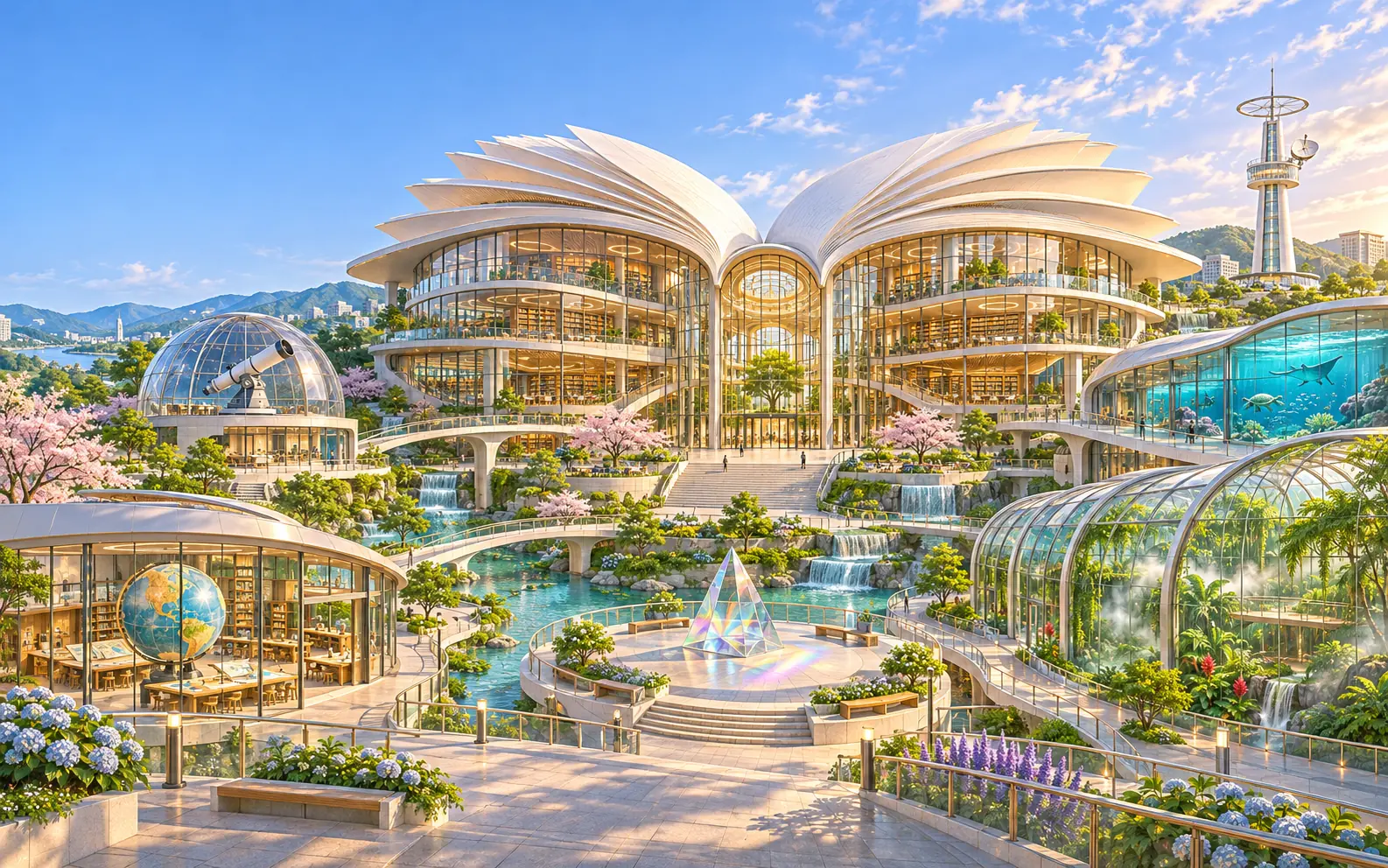
The three worlds are AI-generated imaginary scenes, not documentary photographs or scientific diagrams.

Explore every question

Open a book that catches your eye. Follow the next question.

Three rooms. A place to begin.

Choose one of three reading rooms

Current affairs, in context

Understand now

Read global numbers at a human scale.

If AI gets more efficient, why does electricity demand grow?

Energy per task and total electricity demand answer different questions. Read the IEA’s 2026 outlook through a small model of efficiency, use and the boundaries around a number.

Text: ~5 min

Sources checked
Explore more in this room

Hobbies & culture, explored

Follow your passions

Investigate a feeling familiar to anyone who plays.

Does a 5% game drop become certain after 20 tries?

Independent drops, a guarantee on attempt 20 and drawing without replacement can all start at 5%. Compare how three fictional loot systems change the wait.

Text: ~5 min
Explore more in this room

Learning & everyday wonders

Discover the world

Compare the clock’s noon with the Sun’s.

When all of Japan says noon, why doesn't the Sun?

East of the standard meridian, solar noon comes earlier. Yet even in Akashi, it does not always fall at 12:00. Separate the difference due to place from the difference due to date to untangle the relationship between clocks and the Sun.

Text: ~8 min
Explore more in this room

One interest opens another world.

Let curiosity take a turn.

Choose a thread to connect two books from different subjects.

Find more reading paths

The question between them

From the cinema to the open sky.

Motion on a screen and colour in the sky work differently. Follow both to look again at what reaches your eyes.

The question between them

From games to the calendar.

After exploring chance, investigate the exceptions to a four-year rule. Different mechanisms, the same pleasure of taking rules apart.

The question between them

From AI images to the print workshop.

Trace how an image reaches you, then explore how type makes copies. Two ways of creating and sharing information, centuries apart.

Settle in for a longer journey.

Browse the collections

Another way to see the everyday.

Take a small question with you.

Paper, food and language. Begin somewhere familiar.

Browse all 31 books

At the end of a book, follow its next reading path.

Looking for somewhere in particular?

Books collected in this browser

Your own little library.

Open My bookshelf →

Return to your six most recently saved articles here.

Which question will be your first book?

Save articles to return to their stories and sources.

Find an article in the catalogue →
Walk through the citySix selected exhibits, through the city's buildings

Yorimichi Library · A city of knowledge

Curiosity needs no destination.

A whole city.
One great library.

Follow an everyday “why” a little further.

A bright city of six exhibition halls and waterfront walkways surrounds a white central library shaped like an open book. AI-generated setting illustration.
Enter the library

The city, buildings and reading room are AI-generated setting illustrations. The buildings introduce selected exhibits. All 31 articles are listed in the library catalogue.

Find an exhibition hall Building numbers and the questions inside
From the waterfront square into the library
Six exhibits. See for yourself.Move a map. Turn the Moon. Follow a discovery into a book.

01 / MAP WORKSHOP Central library exhibition room

The same area. Further north.

Move B north while keeping its area on the sphere unchanged.

Starting point: B is centered at latitude 60°. Compare both projections and their values below.

On the sphere, A = B.On the map, appearance changes with projection and latitude.

MercatorPreserves local angles

Map area B/A 4.13×

Regions A and B, equal in spherical area, on a Mercator graticuleFixed region A and region B centered at latitude 60°. Map area B/A is approximately 4.13. The map is clipped beyond latitude 80°. Continents and borders are not shown.AB

80°S–80°N (polar regions clipped) · Graticule every 30°

MollweidePreserves area

Map area B/A 1.00×

Regions A and B, equal in spherical area, on a Mollweide graticuleFixed region A and region B centered at latitude 60°. Map area B/A is approximately 1.00. The whole globe, including the poles, is shown. Continents and borders are not shown.AB

90°S–90°N (poles included) · Graticule every 30°

Fixed A: rust. Movable B: blue. Both have the same original area on the sphere.

This model also changes B’s longitude span to keep its area constant.It does not move an unchanged country or outline across the map.

Central latitude 60°. Spherical areas are equal. Map area B/A is about 4.13 in Mercator and 1.00 in Mollweide.

Regions, scale and calculation conditions

A spans longitude −70° to −30° and latitude −10° to 10°. B is centered at longitude 70° and latitude c = 0° to 70°, bounded by c ± 10° north–south, with longitude span 40/cos(cπ/180) degrees. At the initial 60°, it matches B in the article: longitude 30°–110°, latitude 50°–70°.

The spherical area remains (40π/180) × 2sin(10π/180) R² ≈ 0.242459 R². Radius R = 1; central meridian 0°. Both drawings use a fixed 640 × 444 viewBox with equal horizontal and vertical scale: 1 R = 82 SVG units. There is no separate fitting, automatic zoom or perspective distortion. Mercator is clipped at ±80°. No continent data is used.

The outline and polygon area ratio use the same point sequence, with 256 subdivisions on each of four edges. This calculates a finite region; it does not substitute 1/cos²c at the central latitude. Mollweide does not preserve shapes or distances.

See the article’s regions, calculation conditions and primary sources →
Read what each projection preserves

02 / MOON & SPACE GALLERY

How can the same face stay toward Earth?

Move both Moons through the same orbital angle, using the fixed page as your reference.

Why does the Moon turn yet show us the same face?

Synchronous rotation
Synchronous rotation: the same four orbital positionsThe marker points left at the right-hand position, down at the top, right at the left and up at the bottom. It keeps facing Earth while turning once relative to the page. The arrow marks the same face of the Moon, not the illuminated part of a lunar phase.Earth←Right↓Top→Left↑Bottom

The same face always toward Earth.

If the Moon did not rotate
No rotation: the same four orbital positionsAt every position the marker points left on the page. The face toward Earth changes. The arrow marks the same face of the Moon, not the illuminated part of a lunar phase.Earth←Right←Top←Left←Bottom

The orientation relative to the page stays fixed.

To keep the same face toward Earth, rotate once per orbit.With synchronous rotation, the same face stays toward Earth. Without rotation, the face toward Earth changes.

Four fixed positions are shown side by side. With synchronous rotation the marker turns; without rotation it keeps pointing left.

Marker direction relative to the page and distant stars
Orbital positionRightTopLeftBottom
Synchronous rotation←↓→↑
No rotation←←←←

A schematic of orientation as seen from above. The arrows mark the same face, not lunar phases. It does not reproduce scale, the actual orbit or phases, and simplifies real complexities including libration. Read the article for how synchronization develops.

Why do the periods match? Read on

03 / SIGNAL CONVERSION ROOM

The “sounds” of space:
where do they come from?

A signal related to waves

Into audible frequencies

Features of image data

Into rules for sound

A conceptual device for reading conversions. The original information and conversion rules differ. This does not reproduce actual waveforms or audio.

Read the sound legend

This exhibit explores observations and data transformations. The detailed article, comparisons and sources are free to read. It does not play audio.

04–05 / LIFE GALLERY & RAIN GREENHOUSE

Keeping life moving.
Bringing out a scent.

Inside a body and beyond a droplet: two different mechanisms to explore.

04 / THE PUMPING STATION

Three hearts.
One job?

2

Toward the gillsTwo hearts

1

Toward the bodyOne heart

A diagram of roles, not the positions or sizes of the hearts. Lines indicate the destination of each job; they do not reproduce the circulatory route.

AI-generated illustration of a reddish-brown octopus with its arms spread among rocks in shallow turquoise water. It is not evidence of heart position or behavior.
AI-generated illustration · Not evidence of heart position, anatomy or behavior.
Read the 2 + 1

05 / A WINDOW INTO ONE DROP

The smell of rain:
what happened next?

AI-generated illustration of a shallow puddle beside wet soil and stones. It is not an observational photograph of microbes or aerosols.
AI-generated illustration · Not a photograph of microbial or aerosol experiments.
  1. Announcement

    Aerosol generation by bubbles is announced

  2. Follow-up

    Follow-up experiments use bacteria

The 2015 work revealed a transport mechanism. The 2017 work added experiments with living bacteria. The scale and effects outdoors are further, separate questions.

Follow the research timeline

06 / SKY TERRACE

Before the color,
follow the light.

Daytime blue and sunset red: the paths to your eyesBy day, light scattered along the way reaches your eyes. At sunset, light travels a longer path and reaches them directly. This schematic compares paths, without reproducing distances, amounts of scattering or wavelength ratios.

Daytime blueScattered along the way, then into your eyes.

Sunset redA longer path, then directly into your eyes.

A schematic of paths only. It does not reproduce distance, scattering amounts or wavelength ratios. This is not an invitation to look directly at the Sun.
Compare the two paths

03 / KNOWLEDGE NETWORK

Where does this question lead?

12 starting points into a library of 31 books.
Choose a station to see why the next article connects.

All stations and the reasons for following each connection are shown.

A knowledge network linking 12 existing articlesArrows mark editorial detours between articles, not shared physical principles. Follow each station’s link for the reason behind its connections.01Maps07Edo time11Calendar reform02Moon09Soy sauce08Language12Book direction10QR codes06Sky05Rain04Octopus03Space sounds
Lines show comparisons and associations among articles selected for this diagram. The adjacent links, with explanations, also lead to books outside the diagram. A connection does not mean that the subjects work by the same mechanism.

Detours from Maps

How much truth is there in "big" on a map? ↗

  1. Does pitch have a legend, like a map? →

    On a map, the choice to preserve area or shape changed the appearance. When data from space become sound, what do pitch and volume correspond to? The formulas are different, but the question of how to read the rules of a representation connects the two.

  2. Beyond maps, what else changes how things look? →

    A map's shapes result from a projection people choose. The blue sky is a phenomenon in which light is scattered by the atmosphere before reaching us. Keep the human-made representation distinct from the natural phenomenon, and next ask, "What happened before the light reached my eyes?"

  3. Can the same face remain visible while its direction changes? →

    We compared ways of drawing maps. With the Moon, we see the same face even as its orientation changes. Move a Moon model around an orbit on paper to untangle this apparent contradiction. This detour concerns the relationship to the observer, rather than the mechanism of a projection.

  4. Can every "koku" be drawn equally long? →

    On the map, we compared regions with the same original area. Next, visit Edo-period timekeeping. Hold the length of a whole day fixed, then divide daytime and nighttime into six parts each: a koku, a traditional unit of time, can stretch or shrink even though its name stays the same.

  5. Take the question of "size" to the photocopier →

    After separating area from apparent shape on a map, look at paper enlargement. Is the 141% setting for going from A4 to A3 a multiplier of area? Distinguishing side length from area makes the copier's numbers easier to read.

Detours from Edo time

Did an Edo-period “hour” change length between summer and winter? ↗

  1. Can the same time word lead to different meeting days? →

    For an ittoki, the season and timekeeping system determined its length. Next, place the Japanese word shiasatte on a calendar and compare cases where its meaning differs between speakers. Distinguishing units of time from words that refer to days offers another way to explore shared conventions.

  2. From dividing a day to organizing a calendar →

    Here we examined divisions within a day. Next, move to the calendar that counts the days, and explore, at a different scale, the systems that support our everyday tools for handling time.

  3. Try asking what stays the same when you compare maps →

    Comparing daylight and night required distinguishing the whole day from the number of divisions within it. With maps, appearances can change even when the original areas are equal. The mechanisms differ, but you can carry the habit of checking comparison conditions from one to the other.

  4. From a changing ittoki to a shared noon across Japan →

    An Edo-period ittoki was a unit that followed the seasons. Next, explore the convention that synchronizes clocks in different places. If the clocks show the same time, does that mean the Sun is in the same position too?

Detours from Calendar reform

Month 12, day 2—then New Year’s Day. Where did the missing dates go? ↗

  1. Explore the rules that divide a day into hours →

    Calendars group days into years and months; timekeeping divides a single day. Keeping those roles separate helps us read about past systems of time without confusing them.

  2. The Moon in a calendar and the familiar face in the sky →

    Calendar months take their cue from the Moon’s phases. Compare the Moon’s motions while keeping that question separate from why we see the same face.

  3. The same information, a different reading order →

    Calendar numbers and book pages become readable only when we share the rules of their sequence. Explore another everyday convention.

  4. Why does the new calendar need February 29? →

    The calendar reform changed how dates were counted. In the Gregorian calendar that followed, even the adjustment made every four years has exceptions. Look at 400 years together to examine the relationship between seasons and dates.

Detours from Moon

Why does the Moon turn yet show us the same face? ↗

  1. What can we miss when something looks the same? →

    The Moon is rotating even while we see the same face. Next, compare familiar shapes on a map with their actual areas. An object's motion and a representation chosen by people work in different ways, but you can carry over the habit of looking beyond appearances.

  2. What can "listening" to space tell us? →

    There are limits to which parts of the Moon we can see from Earth. Next, consider a different way of receiving observed information: shifting signals associated with waves in the Perseus galaxy cluster into audible frequencies. This is neither a story about studying the Moon through sound nor an application of the same principle as synchronous rotation.

  3. From the Moon's appearance to the rules for counting dates →

    The motion that keeps one face toward Earth and a calendar based on lunar phases pose different questions. Next, follow the day when Japan changed its way of counting dates.

Detours from Soy sauce

Can light-colored soy sauce contain more salt? ↗

  1. Compare what looks “large” on a map →

    The connection is the habit of separating visual impressions from the quantity you want to compare. Soy sauce color and map projection are not the same mechanism.

  2. What is the “30%” in QR Code error correction a percentage of? →

    Check the comparison basis before reading the number. For soy sauce, it is an equal volume; for QR Code error correction, it is codewords.

  3. Follow the sky’s color back to the path of light →

    Move from a visible color to the conditions that produce it. Scattering in the sky and the color of soy sauce are not treated as the same phenomenon.

  4. Does the same tablespoon always weigh the same? →

    For soy sauce, we compared salt content at the same volume. Switch to sugar or salt, and the same 15 mL can have a different weight. Take another look at what the measuring tool actually holds constant.

  5. If you add flavors, does the sensation add up too? →

    Move from comparing salt content to how taste is perceived. When kombu and katsuobushi are combined, the story involves not only the quantities of their components but also the response of the system receiving them.

Detours from Language

If you agree to meet “shiasatte,” will you arrive on the same day? ↗

  1. From words for dates to the old ittoki →

    Here we saw how the same word can refer to different days. In Edo-period Japan, an ittoki changed in length with daylight, night, and the season. Compare differences in time expressions that arise for different reasons, and consider what people need to share to understand one another.

  2. What is “light” about usukuchi soy sauce? →

    Knowing a word does not necessarily mean agreeing on what it describes. Next, separate color from salt content when reading soy sauce names. This comparison examines assumptions suggested by a name, a different issue from regional dialect variation.

  3. From a word’s meaning to the conventions of reading direction →

    After comparing words and their corresponding dates, explore which way to follow the text and pages in a book. Meaning and page direction are different issues, but both invite attention to the conventions behind familiar ways of reading.

Detours from Book direction

Books that open to the right or left: the difference goes beyond the letters ↗

  1. Can the same word lead to different appointment dates? →

    Check a convention that readers may assume they share, then explore differences in words used for dates.

  2. Visit the boundary where the sequence of dates changed →

    Page order and date labels both need to be read with their underlying rules in mind. Compare another system woven into everyday life.

  3. From letters people read to patterns machines read →

    Follow the shared question of how information is arranged into the structure of a QR Code. Text typesetting and error correction remain distinct mechanisms.

  4. If paper has a reading order, what about the printing form? →

    After separating the order of characters, lines, and pages, turn to the printer’s side. For the same sentence, the left-right relationship is reversed between the face of the set type and the printed sheet.

Detours from QR codes

How much of a QR Code can be damaged before it stops working? ↗

  1. What does “light” in usukuchi compare? →

    QR Code correction percentages use all codewords as their basis, while soy sauce labels are compared at the same volume. Rather than judging by a number or name alone, take a detour to check what has been held constant.

  2. How were the “sounds” of space created? →

    Trace an expression that reaches your eyes or ears back to its original information and the rules used to transform it. Compare error correction and conversion into sound as distinct processes.

  3. Choose which properties a map preserves →

    Consider choices made for different design goals: QR data capacity, correction information, and size, or a map’s area and shape. The mechanisms are not treated as equivalent.

  4. From patterns to information in the gaps →

    QR Codes contain rules for locating and recovering information. In Morse code, changing the gaps can create different letters even when the dots and dashes remain in the same order.

Detours from Sky

Where does the sky's blue come from? ↗

  1. What if a smell, rather than light, travels through the air? →

    The key to the blue sky was a change in the direction of light. For the smell of rain, follow the route by which materials on the ground enter the air. Light scattering and the movement of matter are different phenomena, even in the same air. Next, begin the comparison with a tiny bubble.

  2. From appearances shaped by nature to appearances chosen by people →

    The sky's color changes with the path light takes to reach us. The apparent shapes and areas on a map change with the projection chosen. The principles are different, but asking "What determines this appearance?" offers a useful way into comparing maps.

  3. Does a paler color mean less of what's inside? →

    For the sky's color, we followed the path of light. Now head to the kitchen and separate the impression given by color from the ingredient you want to compare. Put usukuchi, Japanese light-colored soy sauce, alongside other soy sauces in equal 15 mL portions, and a different answer emerges.

  4. From light in the sky to color on screens and paper →

    In the sky, we followed the path light takes to our eyes. Next, compare a screen that gives out light with paper that receives and reflects it. Explore the different processes hidden inside the same phrase, "adding color."

Detours from Rain

The smell of rain, revisited: can tiny bubbles carry bacteria, too? ↗

  1. Rain carries particles. What does air do to light? →

    In the rain experiments, small droplets carried material into the air. In a clear sky, air molecules change the direction of light. Rather than equating the movement of smells with a blue sky, explore a different mechanism at work in the air.

  2. Is what was filmed the same as what can be concluded? →

    In the rain experiments, we distinguished bubbles caught on camera from their subsequent effects outdoors. With sounds from space, distinguish observed structures from their conversion into something audible. Both offer a way to ask how far conclusions can reach beyond what we have seen or heard.

  3. How do we read "correct" together with its conditions? →

    The meaning of the rain experiment changes if surface and impact conditions are omitted. A map is also judged differently depending on whether we are comparing areas or finding a route. This detour recovers the conditions attached to a conclusion; it does not treat the scientific mechanisms as identical.

  4. Will "let's meet shiasatte if it's sunny" be understood? →

    For rain, we checked the limits of what could be said. Next, turn to an ordinary meeting arrangement. Put a word you think you know—shiasatte, a Japanese relative-date word—onto a calendar, and a difference in meaning becomes visible.

Detours from Octopus

An octopus's three hearts work as a team. ↗

  1. After the body, question what seems normal to our ears →

    We stepped away from the familiar human pattern of one heart and red blood. Next, explore an example from the Perseus galaxy cluster in which signals associated with waves are shifted into frequencies people can hear. This editorial detour does not equate the process with circulation; it asks us to avoid using only the human body and senses as our standard.

  2. Outside the body, what does the carrying? →

    For the octopus, we separated the job of pumping blood from the job of carrying oxygen. Now step outside the body. What can tiny droplets ejected from a raindrop carry? This is not the same mechanism as circulation; it is a different experiment in which to ask what carries what.

  3. After three hearts, take a look at three squares →

    The same number does not mean the same job. After distinguishing octopus hearts by where they send blood, separate a QR code's three position-detection patterns from the information used to correct errors.

Detours from Space sounds

From the "sounds" of space to reading a map. ↗

  1. Once you can read a sound's legend, what should you look for on a map? →

    After checking what pitch and timbre represent, compare area and shape on a map. Mapping data to sound and map projection are different techniques, but you can carry over the question of what was preserved and what was changed in the original information.

  2. Is what is "normal" for humans normal for other living things? →

    We distinguished the range people can hear from the signals present in space. Next, compare the familiar human pattern of one heart and red blood with an octopus. This editorial connection does not equate sound with circulation; it questions relying too heavily on the human body and senses as a standard.

  3. From translating for the ear to the order followed by the eye →

    For space sounds, we distinguished different conversions used to receive information. Books, too, have separate rules for following characters, lines, and pages. Untangle familiar reading habits one level at a time.

Back to the complete catalogue →
Choose another path through a question

QUESTION JUNCTION / CHOOSE A WAY THROUGH

Build a detour around what interests you.

A different question opens a different way into the same article.

Each approach lists its destinations and the reasons to follow them.

Read all three approaches side by side. Each path leads to a section in an existing article.

Question appearances

What lies between what you see and the original information?

  1. Compare “size” on a map ↗

    Choosing a projection changes the appearance of area. Start by comparing the projections.

  2. Unpack the Moon’s “same face” ↗

    Now change the observer’s viewpoint. Distinguish seeing the same face from an absence of rotation.

  3. Read the “rules” for making sound ↗

    Finally, follow a data conversion. The connection is a question about representations, not a claim that maps and the Moon share this physical phenomenon.

Separate the roles

What happens if we split one apparent job into its separate roles?

  1. Split three hearts into 2 + 1 ↗

    Go beyond the count: distinguish pumping toward the gills from pumping toward the body.

  2. Separate daytime and sunset light paths ↗

    Next, distinguish the paths to your eyes. Circulation and scattering are different mechanisms, but both invite us to follow the steps along the way.

Follow the evidence

Find the boundary between what is established and what remains uncertain.

  1. What can one droplet experiment establish? ↗

    Distinguish droplets seen in an experiment from effects across an outdoor environment.

  2. Check the starting point of “space sounds” ↗

    Before assuming a recording, check the original signal and its conversion. This is not the same measurement as the rain experiment.

Each path lets you enter partway through an article. Follow the reason that caught your interest.

Back to the evidence: a source index.

Follow the evidence behind the articles featured here. Sources for every other article are also available from the catalogue.

Find every article and its sources in the catalogue