What changes when worlds connect?
From ceramics in a shipwreck to printing, ocean crossings, cotton mills and planetary carbon: follow what moved and the people whose work made it possible.
Estimated time for the article text only. Allow extra time for figures, comparisons and interactive exhibits.
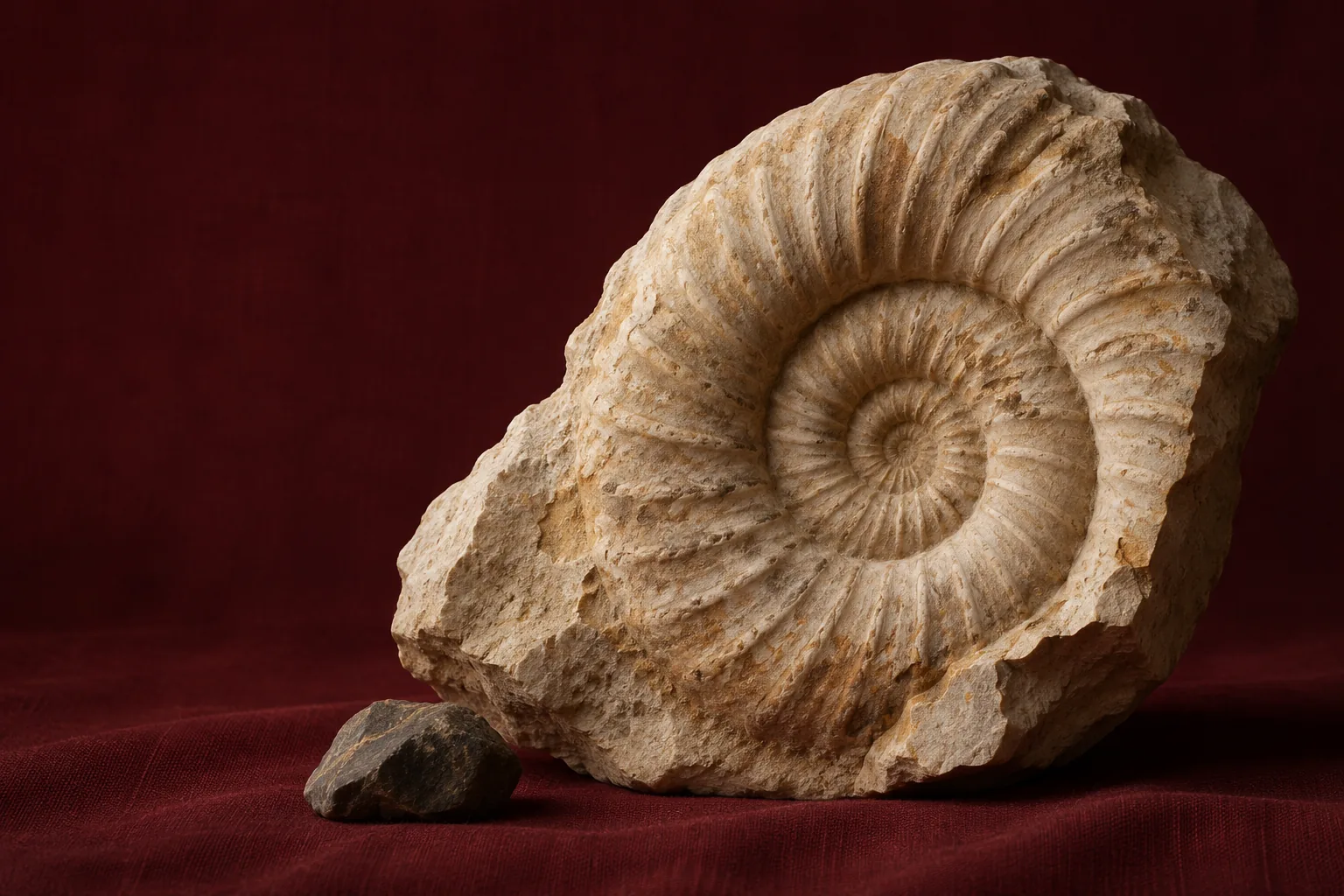
Connections carried knowledge and goods over greater distances while also extending power and burdens. Separating what moved, who worked, who chose and where benefits and harms remained lets us examine development without ranking societies along one ladder.
How many worlds can one ship connect?
How far can a vessel recovered from the seabed take us? A ninth-century shipwreck near Belitung in the Java Sea carried many ceramics made in China. Its construction and the forms and decoration of its cargo provide evidence for maritime commerce connecting China with the western Indian Ocean. They invite questions about relationships between production and intended markets.
Chinese ceramics do not establish that everyone aboard came from China. Shipbuilding methods, crew, merchants, cargo and final destination are separate questions. One wreck also cannot reveal the entire volume of trade or every stage of a voyage. Separating these inferences makes distant connections more concrete.
The previous chapter explored places where people and work gathered. Here we follow routes between them: movements of objects, words, techniques, people, pathogens and fuel. As we investigate what made those movements faster or larger, we also ask who could choose to travel, who was compelled to move, and where benefits and burdens remained.
The Silk Roads were never a single road
The name Silk Road can suggest one line connecting east and west. In practice, changing overland routes through Central Asia overlapped with maritime routes linking ports in South Asia, West Asia, Africa and beyond. Politics, rivers, ports and available commercial relationships influenced which routes could be used.
An object can travel a long way without one person carrying it from end to end. Transfers between towns or ships offer possible alternatives. A foreign object at an archaeological site therefore does not by itself prove direct meetings between the populations of its origin and destination. Materials, manufacturing techniques, findspots and documents help evaluate intermediaries.
Religions, skills and stories traveled too, through teaching, translation and adaptation. Knowledge need not retain an unchanging form like the imagined contents of a sealed box. Attending to the work of connecting languages, units and commercial practices makes the history of routes more than a succession of celebrated travelers.
LOOK CLOSER · COMPARE THE EVIDENCE
What connections enable—and what they ask us to examine
Roads, ports and transfer points
- What it makes possible
- Movement of goods, messages and skills across regions
- Burdens and limits to investigate
- Maintenance labor, uses of power and unequal access
Printing and distribution
- What it makes possible
- Copies of a text that can be compared in different places
- Burdens and limits to investigate
- Unequal access and resources; errors can spread too
Atlantic crossings
- What it makes possible
- Movement of crops and other organisms to new regions
- Burdens and limits to investigate
- Colonial rule, disease, forced labor and forced migration
Industry using fossil fuels
- What it makes possible
- Changes in the scale and location of power and production
- Burdens and limits to investigate
- Labor behind materials, emissions and unequal benefits and harm
This comparison supports questions across different settings. It does not subtract harms from benefits to award a single score.
Evidence for this comparison
- UNESCO — About the Silk Roads ↗ (opens in a new tab)
- UNESCO World Heritage Centre — Qhapaq Ñan, Andean Road System ↗ (opens in a new tab)
- Jacob Nadal and Dan Paterson / Library of Congress — From Jikji to Gutenberg ↗ (opens in a new tab)
- Library of Congress — Europe Claims America: The Atlantic Joined ↗ (opens in a new tab)
- Smithsonian National Museum of African American History and Culture — King Cotton ↗ (opens in a new tab)
- Nick Gudde / Science Museum — James Watt, office equipment and high-street fashion ↗ (opens in a new tab)
- Intergovernmental Panel on Climate Change — Climate Change 2023: Synthesis Report — Summary for Policymakers ↗ (opens in a new tab)
The Americas already had networks of connection
Trade and transport connected people in the Americas before 1492. The Andean Qhapaq Ñan is a major example. Incorporating earlier roads, the system expanded across a vast area with the Inka in the fifteenth century. Coasts, highlands and steep slopes required different engineering responses, including bridges and stairs.
A route is more than a line for movement. Storage facilities, places supporting travelers and officials, and the work of people carrying information gave the system its reach. Roads served communication and exchange while also supporting military and political power. Calling them convenient leaves unanswered whose travel they facilitated and who maintained them.
Our world map does not begin with lines spreading from Europe into empty spaces. Regions already had routes and knowledge in use. Later Atlantic crossings entered inhabited worlds, transforming existing relationships rather than bringing human connections into existence for the first time.
Which part of sharing knowledge did printing change?
Copying is a major task when a text must reach many places. A Chinese woodblock-printed Diamond Sutra scroll bears a date of 868 CE. Korea’s metal-type book Jikji dates to 1377, while Gutenberg’s printing enterprise belongs to mid-fifteenth-century Europe. These surviving works come from different settings; they broaden an account that would locate the completion of printing in just one place and moment.
The oldest surviving dated example is not necessarily the first invention. Nor do these dates prove a direct route of technical transmission from Korean metal type to Gutenberg. Comparing principles, materials, processes and institutions differs from establishing a particular chain of transmission.
Printing changes part of the work of knowledge. Composing, translating, correcting, supplying paper, distributing and reading remain necessary. The same error can also be reproduced in many books. Distinguishing numerous copies from universal access or accurate content reveals both printing’s power and the conditions under which it operates.
Ocean routes required more than one instrument
A mariner’s astrolabe measures the altitude of the Sun or a star. Combined with astronomical knowledge, this can help determine latitude. It does not automatically supply longitude, the other coordinate needed to locate a position. An instrument with ancient astronomical roots, developed further in the Islamic world and elsewhere, was adapted for use at sea.
Navigation combines winds, currents, ships, maps, provisions and experience. Celestial observations matter within those conditions. An explanation in which one instrument makes conquest inevitable leaves out finance, political competition, negotiation and conflict with local people. Technology does not choose its own purposes.
Columbus’s arrival in the Caribbean in 1492 marks a major turning point for sustained Atlantic crossings and colonial expansion. It is not the year humans first found those lands. Asking whose perspective defines a “discovery” opens histories that a celebration of new routes alone would miss.
Food and pathogens crossed oceans too
Everyday food can reveal these movements. Tomatoes in Italy, potatoes in Ireland and chilies in Thailand reflect the spread of American plants to other regions. Wheat, sugarcane, cattle and horses traveled toward the Americas from Europe and elsewhere. Such movements of living organisms after 1492 are known as the Columbian Exchange.
Transporting a seed does not instantly reproduce the same farming system or cuisine everywhere. Climate, land, cultivation, preparation and human choices shape adoption. A plant’s distant origin is compatible with its central place in a present-day food culture. Its history includes what people did after it arrived.
Pathogens also inflicted devastating harm on Indigenous societies. Disease cannot be separated from conquest, forced labor, displacement and damage to food systems. The neutral-sounding word “exchange” can obscure these inequalities of power and violence. Alongside the lives lost, the histories of people who survived and rebuilt their communities remain essential.
People crossed the same oceans without a choice
Ocean crossings cannot all be described as free travel or voluntary migration. In the transatlantic slave trade, African people were captured and forcibly transported by ship. Systems treating human beings as property compelled them to work on plantations and elsewhere. Expanding commercial connections coexisted with the denial of choices about movement and work.
The Smithsonian’s cotton exhibition connects enslaved labor to raw materials, factories and finance. The history of a mechanized factory cannot stop at its walls. Following who produced its inputs and who controlled land and labor reveals connections between technological change and violence.
How can those movements be counted? SlaveVoyages brings together voyage records, distinguishes missing information from estimated values and explains its methods. Documented ships are not identical to the totality of events. Nor does a ship’s account fully describe the people aboard. Quantifying these movements must go together with preserving the dignity of the individuals whom the records reduced to quantities.
Did industrialization begin with a single steam engine?
Industrialization invites a story beginning with one invention, but steam engines had predecessors and conditions of use. Early Newcomen engines often pumped water at mines where coal was cheap. Turning improvements associated with Watt and his collaborators into working machines required skills, parts, finance, contracts and installation work. Existing power sources such as water did not immediately disappear.
What factories made and whom they supplied also mattered. Historian Prasannan Parthasarathi examines Manchester’s cotton industry in relation to competition with Indian textiles that already served extensive markets. This is a research perspective that identifies conditions missed by an exclusively British account, not a claim to have found one cause explaining all industrialization.
Connecting energy, skills, commerce, institutions and materials removes the need for stories of innate superiority. Benefits and burdens were distributed across different places, including through coerced production of raw materials. Increased output, improved lives for workers and displaced environmental costs are separate questions to investigate.
Geological carbon moves on a human timescale
Chapter 1 examined Earth’s long history. Burning fossil fuels reconnects with that timescale: carbon stored underground is extracted as fuel and transferred into the atmosphere through combustion. Processes that changed the scale of available energy also changed the rate and amount of carbon movement. Planetary history and industrial history cannot remain in separate books.
The IPCC’s 2023 Synthesis Report concludes that human activities, principally greenhouse gas emissions, have unequivocally caused global warming. This assessment does not rest on one hot summer. It combines many lines of evidence, including observations and physical understanding. Past natural climate changes do not remove the need to investigate the causes of current warming.
Yet describing humanity as one actor conceals differences. The assessment also identifies unequal contributions to emissions and unequal vulnerability, both between and within countries. Those responsible for more emissions are not always those suffering greater harm. A history of humanity must not assume that responsibility or available choices are distributed equally.
Development needs more than one measure
Regions did not all follow these developments in the same order. Lists of cities, printing and factories cannot establish how people lived. Attention must reach beyond visible power and monuments to the less conspicuous work sustaining everyday life. A greater number of connections is not, on its own, a measure of well-being.
Choose an ordinary object and ask four questions. What moved? Whose work made that possible? Who decided its destination and terms? Where did benefits and burdens remain? Cotton clothing, a meal or a book will do. Add people and institutions between the endpoints of its journey, and “the world became connected” gains a more precise meaning.
This feature does not present the present as history’s completed form. From planetary formation through life’s changes, human branching, food, cities and routes, we have followed different timescales and kinds of evidence. Detours into shared clock time or codes for sending letters continue that inquiry. The workings of large histories can be found again in small tools and everyday choices.
Sources and verification notes
This article is an original synthesis of primary sources and explanations from specialist institutions.
Generative AI assists with research, structure and English translation. Claims are compared with sources and editorial checks are performed; independent specialist and native-English reviews have not yet been completed.
- Smithsonian National Museum of Asian Art / National Heritage Board, SingaporeShipwrecked: Tang Treasures and Monsoon Winds ↗ (opens in a new tab)
- UNESCOAbout the Silk Roads ↗ (opens in a new tab)
- UNESCO World Heritage CentreQhapaq Ñan, Andean Road System ↗ (opens in a new tab)
- Library of CongressWhat Came To Be Called America ↗ (opens in a new tab)
- International Dunhuang Programme / British LibraryBuddhist Texts: The Diamond Sutra ↗ (opens in a new tab)
- Jacob Nadal and Dan Paterson / Library of CongressFrom Jikji to Gutenberg ↗ (opens in a new tab)
- Royal Museums GreenwichWhat is a mariner’s astrolabe? ↗ (opens in a new tab)
- US National Park ServiceColumbian Exchange ↗ (opens in a new tab)
- Library of CongressEurope Claims America: The Atlantic Joined ↗ (opens in a new tab)
- SlaveVoyagesAbout the Trans-Atlantic Slave Trade Database ↗ (opens in a new tab)
- Smithsonian National Museum of African American History and CultureKing Cotton ↗ (opens in a new tab)
- Nick Gudde / Science MuseumJames Watt, office equipment and high-street fashion ↗ (opens in a new tab)
- Prasannan Parthasarathi / Science Museum Group JournalThe Indian challenge and the rise of Manchester ↗ (opens in a new tab)
- Intergovernmental Panel on Climate ChangeClimate Change 2023: Synthesis Report — Summary for Policymakers ↗ (opens in a new tab)
Sources checked:
Checked museum objects and exhibitions, heritage descriptions, printing history sources, scholarly analysis, voyage-database methods and the IPCC’s 2023 assessment. Observations are distinguished from editorial questions about the meaning of connections. Years are CE; the earliest surviving example of a technology is not treated as the moment of invention. Industrialization is not reduced to one cause, and differences between regions and participants remain visible.
Rights, status, and revision history
- Status
- Free public edition. Preparation and revision history is retained below.
- 0.1.0
- Rights to the text and diagrams
- The original Japanese text is an independently written summary. The SVG illustrations and conceptual diagrams were newly created. No external images, original source text, or audio recordings are reproduced.
- How sources are used
- Sources are referenced by links only. All rights to each source remain with its respective rights holders.
- · v0.1.0 — Created a private preview chapter for the permanent Earth, humanity and civilization feature, checking primary sources. Formal publication has not been approved.
For another read, another day.
THE NEXT BOOK
A new question, on the next shelf.
These paths are editorial comparisons and associations. They do not claim that different subjects work by the same principle.
How did distant cities synchronize their clocks?
Explore what a shared time standard changes when people and information travel farther.
When all of Japan says noon, why doesn't the Sun?How do you read the gaps in Morse code?
Fast communication still depends on small rules shared with the receiver. Try the relationship between signals and intervals.
Two short beeps. Change the gap, and the letters change.Return to Earth’s timescale
Place industrial materials and fuels back within the long history of a changing planet.
When was Earth “made”? From rock clocks to clues about oceans