When did life begin? How tiny cells changed a planet
Rock patterns, dividing membranes, shared ancestry and rising oxygen tell different stories. Learn to read their evidence while exploring life’s unresolved origins and the world transformed by microbes.
Estimated time for the article text only. Allow extra time for figures, comparisons and interactive exhibits.
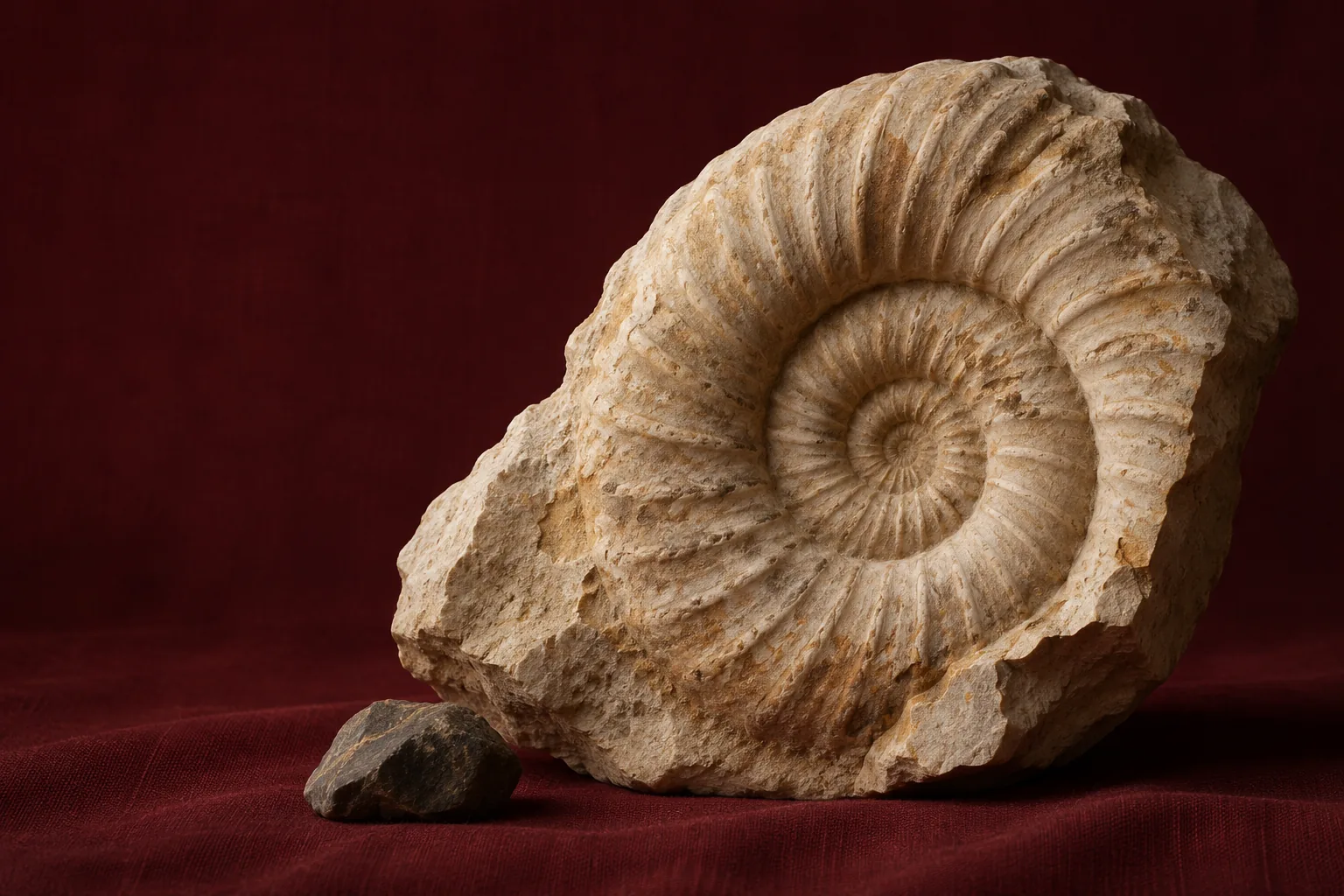
The oldest surviving traces, experimentally possible processes and reconstructed common ancestors answer different questions. Life’s origin remains unresolved, while multiple kinds of evidence reveal how microbes changed planetary chemistry and how associations between cells shaped new ways of living.
Evidence that life existed is not a record of its first moment
Once we picture an Earth with water, it is tempting to put a first cell into the scene. No fossil records that exact transition. Instead, researchers investigate traces of organisms that were already active and experiments that reproduce possible steps toward living systems. Moving between these kinds of evidence shows both how much we can learn and where a gap remains.
The Dresser Formation in Western Australia contains structures and chemical evidence interpreted as microbial activity about 3.48 billion years ago. A 2017 study examined several features in rocks interpreted as ancient hot-spring deposits. They offer important evidence that life inhabited that environment. They do not establish that life first originated there.
Imagine finding a town library’s oldest surviving loan slip. It need not record the library’s first borrower: older slips may have disappeared, and another archive may hold an earlier record. Rocks, too, undergo deformation, heating and erosion. The oldest evidence we have found marks a limit in the surviving record, rather than necessarily the beginning of life itself.
How can a pattern in rock become evidence for life?
Wavy layers or cone-shaped structures can suggest the work of a microbial community. Living microbial mats help us understand how organisms can trap sediment and build layered structures. Yet a similar-looking shape may have more than one explanation. Mineral growth or later deformation can also make a rock look biological.
Structures in approximately 3.7-billion-year-old rocks at Isua, Greenland, were reported as traces of ancient life and subsequently re-examined. Research described by the US Department of Energy used three-dimensional geometry and chemical analysis to argue for deformation of the rock instead. A peak on one cut surface can tell a different story if the whole structure turns out to be an elongated ridge.
Researchers therefore compare shape with the rock’s original environment, the distribution of chemical components and the effects of later heating or distortion. A particularly revealing question is whether the same feature could form without organisms. The case for life becomes stronger when independent observations converge on a biological explanation, rather than when one shape merely looks familiar.
LOOK CLOSER · COMPARE THE EVIDENCE
Four windows onto the beginnings of life
Structures and chemistry in ancient rocks
- What it can directly investigate
- Traces consistent with biological activity and their preservation setting
- What it cannot establish alone
- Whether this was the first life, or whether nonbiological processes explain the traces.
Experiments producing organic compounds
- What it can directly investigate
- Whether particular molecules form under chosen conditions
- What it cannot establish alone
- Whether cells form, or whether early Earth actually followed this route.
Growing and dividing membrane experiments
- What it can directly investigate
- Compartment growth, division and distribution of contents
- What it cannot establish alone
- Whether an entire living system copies its information and inherits variation.
Genetic comparisons of living organisms
- What it can directly investigate
- Ancestral relationships and model-dependent age estimates
- What it cannot establish alone
- The form of the first life or a directly measured birth date.
An editorial comparison of what different methods test and what remains unresolved. This is not a ranking of evidence.
Evidence for this comparison
- Djokic et al. / Nature Communications — Earliest signs of life on land preserved in ca. 3.5 Ga hot spring deposits ↗ (opens in a new tab)
- US Department of Energy, Office of Science — Early “Fossils” Formed by Tectonics, not Life ↗ (opens in a new tab)
- NASA — A Stormy, Active Sun May Have Kickstarted Life on Earth ↗ (opens in a new tab)
- Zhu & Szostak / Journal of the American Chemical Society; MIT repository — Coupled Growth and Division of Model Protocell Membranes ↗ (opens in a new tab)
- Moody et al. / Nature Ecology & Evolution — The nature of the last universal common ancestor and its impact on the early Earth system ↗ (opens in a new tab)
Having the ingredients does not finish the recipe
Can components used by life be made without organisms? In 1953, Stanley Miller and Harold Urey brought this question into the laboratory. Electrical discharges through an apparatus containing methane, ammonia, water and hydrogen produced organic compounds, including amino acids. Physical and chemical reactions could lead toward molecules used in cellular processes.
Amino acids alone leave many problems unsolved. Can ingredients accumulate in useful concentrations? Can reactions continue without their products being destroyed too quickly? How might inheritance become connected to a system that takes in matter and energy? Arranging materials on a bench and building a workshop that keeps operating are different kinds of achievement.
The composition of the early atmosphere is also uncertain. Experiments described by NASA in 2023 compared organic synthesis under different gas mixtures and energy sources. Showing that a reaction occurs under particular conditions gives researchers a route to investigate. It does not by itself establish that those conditions and that sequence actually produced the first life on Earth.
A growing, dividing membrane opens another set of questions
Consider a boundary around a cell. In a large volume of water, molecules that need to interact can disperse. A small compartment can keep a useful combination together. But a completely closed container cannot admit new ingredients. A boundary has to reconcile enclosure with exchange.
In a 2009 model-protocell experiment, supplying material to fatty-acid membrane vesicles made them grow into long shapes. Gentle shear then divided them into smaller vesicles, distributing enclosed RNA among the daughter compartments. The experiment showed a way for physical and chemical processes to couple growth and division without starting with all of a modern cell’s elaborate machinery.
This form of multiplication is not a complete demonstration of living reproduction. The experiment did not build the entire system of a self-copying genome, inherited variation and differences in reproductive success. How can compartment division, information copying and sustained chemistry function together under compatible conditions? Following one success to its next unresolved problem reveals why life’s origin is as much about connecting processes as producing individual components.
LUCA is not the name of the very first organism
Present-day organisms provide another route into the past. Comparing widely shared features, such as the machinery that reads genetic information and makes proteins, reveals relationships that lead back to common ancestry. LUCA—the last universal common ancestor—occupies a deep position in the ancestry of known cellular life.
“Last common ancestor” does not mean “first living system.” It describes a point reached by tracing surviving lineages backward until their ancestry joins. There was a history before that point, and other lineages may have left no descendants alive today. LUCA is not a name attached to a single excavated first cell.
A 2024 study used gene comparisons and dating models to estimate LUCA at roughly 4.2 billion years ago. It did not discover a LUCA fossil of that age. Such estimates depend on assumptions about evolutionary rates, relationships and age calibrations. Molecular comparisons extend the questions we can investigate beyond what rocks preserve, but a model-derived age needs a different museum label from the age of a directly dated fossil-bearing deposit.
Microbes changed the chemistry of their planet
Treating the early microbial world as a long interval in which nothing happened would hide some of Earth’s largest transformations. Microorganisms take in substances and release others. Across immense spans of time, those countless small reactions help reshape oceans and atmosphere. Earth is both a setting for organisms and a place affected by their activity.
Cyanobacteria are bacteria that use light in photosynthesis and release oxygen through reactions involving water. The organisms in this story are not forests covering the land. Nor should every form of photosynthesis be assumed to release oxygen. The question concerns the particular oxygen-producing process and the lineages in which it developed.
A 2021 MIT study used genetic comparisons and other constraints to infer that oxygenic photosynthesis originated before the major accumulation of atmospheric oxygen. Estimates of its age vary with the evidence and methods used. The presence of life, the evolution of oxygen production and the rise of oxygen in the atmosphere are separate events. Keeping them apart makes this long interval far more intelligible.
Making oxygen and accumulating oxygen are different processes
A running tap does not raise the water level if a drain removes water just as quickly. This analogy separates supply from accumulation; it is not a literal model of the atmosphere. Oxygen, too, can react with surrounding materials or be consumed by organisms instead of remaining in the air.
Substances including dissolved iron provided important chemical sinks in the early ocean. Even with oxygen-producing microbes present, conditions depended on how rapidly oxygen was consumed and where it could reach. Evidence for oxygen near the sea surface is not automatically evidence for the same concentration throughout the deep ocean and atmosphere.
The major oxygenation beginning around 2.4 billion years ago is known as the Great Oxidation Event. Researchers investigate this extended transition through elements and isotope patterns preserved in rocks. It was not a single-day switch to present-day air. A 2021 modeling study described by NASA also investigated the possibility of very low atmospheric oxygen before this transition. Counting consumption as well as production brings the interaction between life and its planet into view.
A more habitable environment—for which organisms?
Because we breathe oxygen, we can easily read oxygenation as a straightforward improvement of Earth. Organisms, however, use different kinds of chemistry. Oxygen offers major benefits in respiration, while oxygen itself and reactive compounds derived from it can disrupt other organisms’ enzymes and metabolism.
Microbes adapted to oxygen-poor settings still live in places such as sediments and animal intestines. A 2021 research review challenges the idea that these organisms simply failed to evolve defenses against oxygen. Many possess substantial defenses. Nevertheless, reactions well suited to anaerobic metabolism can themselves be vulnerable to oxygen.
These organisms are not unfinished stages on a staircase leading toward humans. They represent different combinations of environment and biological machinery. Even within a pond, the surface and bottom mud can present different conditions. When calling oxygen advantageous, specify the organism, concentration and process involved. Habitability is more informative when we ask whose requirements a place meets.
A cell can contain a history of encounters
Animals, plants, fungi and many other organisms belong to eukaryotic lineages, characterized by cells with a nucleus that houses DNA. Mitochondria offer a surprising way into their history. These cellular structures, central to energy metabolism, descend from bacteria.
Over evolutionary time, an association between cells became integrated through exchanges of materials, interdependent functions and transfer of some genes to the host. Descendants of a formerly separate lineage became part of cellular organization. A 2024 review of endosymbiosis describes how such integration has shaped biological diversity. The earliest sequence of events and environmental setting remain subjects of research.
Seen this way, a cell is more than a container that simply invented additional parts from scratch: it can preserve the outcome of encounters between lineages. No negotiations or shared intentions are required. Relationships affecting survival and reproduction changed across generations. Life’s history records associations between lineages as well as their branching apart.
Do not reduce the microbial world to a prologue
We have not pinned a single exact birthday on life. Yet that does not mean we know nothing. Ancient deposits reveal environments that already supported organisms. Experiments test what ingredients and membranes can do. Genetic comparisons constrain relationships and possible dates. Each opens a different window onto the past.
The changes also resist a single mandatory itinerary. Oxygen production needs additional circumstances before oxygen accumulates in the atmosphere. The history of endosymbiosis is different from the history of bodies built from many cells. Imagining present-day single-celled organisms as creatures waiting to become animals would obscure the lives they are actually living.
The protagonists here are organisms small enough to escape unaided sight yet capable of changing their planet. Next we enter a world of varied fossil bodies, expanding lives in sea and on land, and relationships reorganized by extinction. We will keep comparing particular bodies and environments, without treating later arrivals as automatically superior.
Sources and verification notes
This article is an original synthesis of primary sources and explanations from specialist institutions.
Generative AI assists with research, structure and English translation. Claims are compared with sources and editorial checks are performed; independent specialist and native-English reviews have not yet been completed.
- NASAHow did life first emerge on Earth? ↗ (opens in a new tab)
- Djokic et al. / Nature CommunicationsEarliest signs of life on land preserved in ca. 3.5 Ga hot spring deposits ↗ (opens in a new tab)
- US Department of Energy, Office of ScienceEarly “Fossils” Formed by Tectonics, not Life ↗ (opens in a new tab)
- NASAA Stormy, Active Sun May Have Kickstarted Life on Earth ↗ (opens in a new tab)
- Zhu & Szostak / Journal of the American Chemical Society; MIT repositoryCoupled Growth and Division of Model Protocell Membranes ↗ (opens in a new tab)
- Moody et al. / Nature Ecology & EvolutionThe nature of the last universal common ancestor and its impact on the early Earth system ↗ (opens in a new tab)
- Massachusetts Institute of TechnologyZeroing in on the origins of Earth’s “single most important evolutionary innovation” ↗ (opens in a new tab)
- NASA AstrobiologyClues to Oxygen on Earth before the Great Oxidation Event ↗ (opens in a new tab)
- Lu & Imlay / Nature Reviews MicrobiologyWhen anaerobes encounter oxygen: mechanisms of oxygen toxicity, tolerance and defence ↗ (opens in a new tab)
- Bennett & Kwak / Genome Biology and EvolutionEndosymbioses Have Shaped the Evolution of Biological Diversity and Complexity Time and Time Again ↗ (opens in a new tab)
Sources checked:
Checked the Dresser study and its corrigendum; the DOE account of the Isua re-evaluation; NASA’s synthesis experiments; the MIT repository abstract of the protocell experiment; the LUCA paper; photosynthesis and oxygenation research; and research reviews of anaerobes and endosymbiosis. The membrane experiment was checked through its repository abstract, not a claimed full-paper reanalysis. About 3.48 billion years dates the selected evidence, about 4.2 billion years is one study’s model estimate for LUCA, and about 2.4 billion years marks a major oxygenation transition. None is presented as a confirmed date for the origin of life or oxygenic photosynthesis.
Rights, status, and revision history
- Status
- Free public edition. Preparation and revision history is retained below.
- 0.1.0
- Rights to the text and diagrams
- The original Japanese text is an independently written summary. The SVG illustrations and conceptual diagrams were newly created. No external images, original source text, or audio recordings are reproduced.
- How sources are used
- Sources are referenced by links only. All rights to each source remain with its respective rights holders.
- · v0.1.0 — Created a private preview chapter for the permanent Earth, humanity and civilization feature, checking primary sources. Formal publication has not been approved.
For another read, another day.
THE NEXT BOOK
A new question, on the next shelf.
These paths are editorial comparisons and associations. They do not claim that different subjects work by the same principle.
Explore branching bodies and mass extinctions
From evidence that life existed, move to the fossil record of diverse bodies and reorganized ecosystems.
Why is life so varied? Branching bodies and mass extinctionsFind microbial activity in the smell after rain
Microbes matter in the present as well as the remote past. Visit the organisms in soil and their connection with a familiar rainy-day smell.
The smell of rain, revisited: can tiny bubbles carry bacteria, too?See oxygen transport through an octopus
Move from oxygen in the environment to its delivery inside a body. Compare an octopus’s hearts and blood with the arrangements familiar to us.
An octopus's three hearts work as a team.